
 Pin it
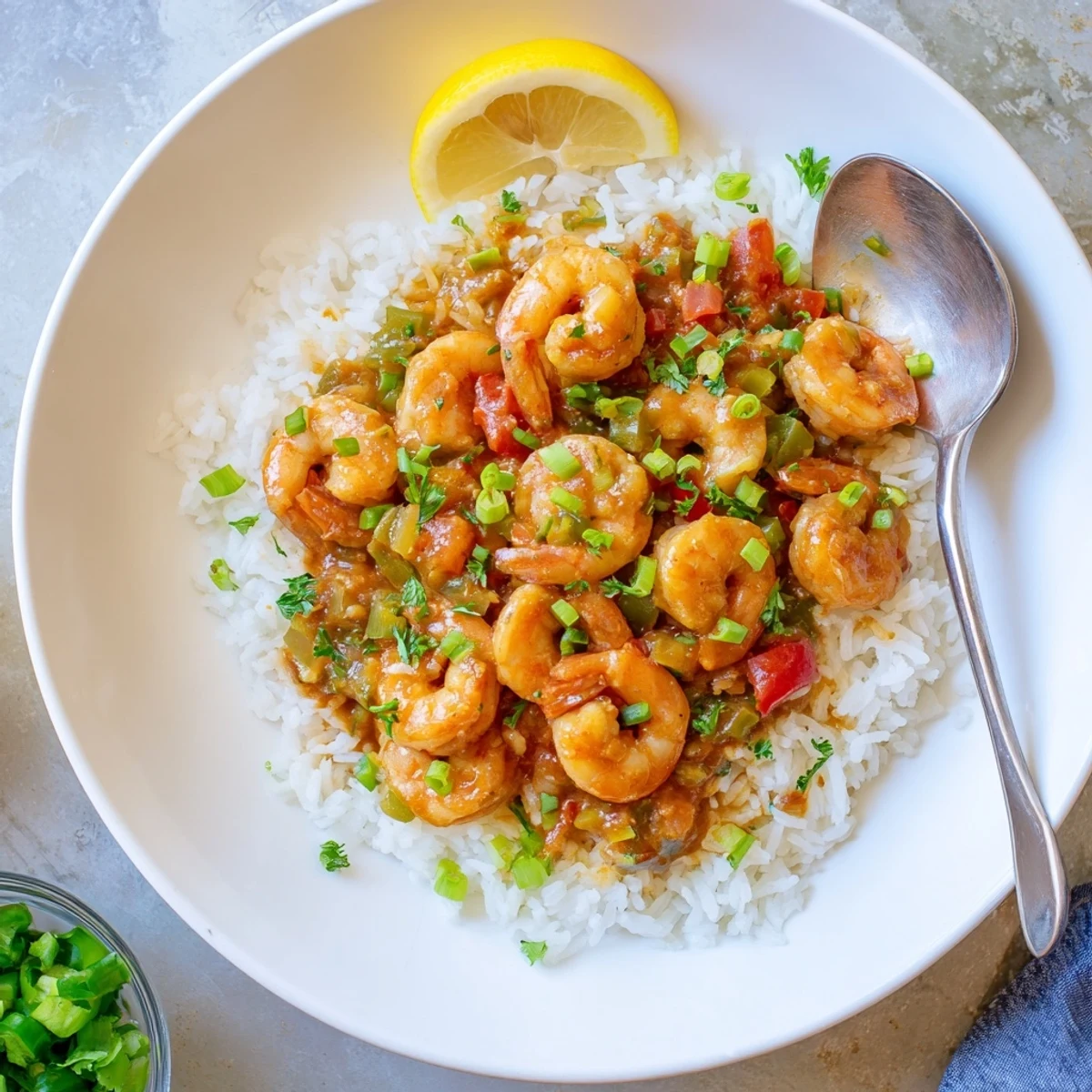
 This beloved Louisiana Creole classic features plump, succulent shrimp swimming in a deeply flavorful roux-based sauce. The magic begins with butter and flour cooked to a deep golden brown, creating that signature nutty foundation. The holy trinity of onion, celery, and bell pepper adds aromatic depth, while Creole seasoning, thyme, and smoked paprika bring the characteristic Cajun heat.
Perfect for serving a crowd, this étouffée comes together in just one hour but tastes like it simmered all day. The rich, spicy sauce blankets the shrimp perfectly, while fluffy white rice soaks up every drop. Garnish with fresh green onions and parsley for brightness, and offer lemon wedges to cut through the richness.
The first time I made étouffée, I stood over that roux for twenty minutes, convinced I'd ruined it because it kept getting darker than any photo I'd ever seen. Turns out that deep copper color is exactly where the magic lives, that nutty aroma filling the whole kitchen. Now it's the dish my friends request most, the one that makes tiny dinner parties feel like special occasions.
Last summer my neighbor caught me making this on her back porch through an open window, said she could smell the roux from three houses away. I ended up sending over a bowl and now we trade kitchen tips weekly, bonded over the fact that good food has a way of bringing people together.
Ingredients
- Large shrimp: Fresh shrimp makes all the difference here, so skip the pre-cooked frozen ones if you can find them raw and still in their shells
- Creole seasoning: This blend carries so much of the dish's personality that homemade versions never quite hit the same notes
- Butter and flour: The foundation of your roux, and honestly worth using good butter since you'll taste it
- The holy trinity: Onion, celery, and bell pepper in equal parts, chopped small so they disappear into the sauce
- Seafood stock: If you can't find it, chicken stock works but shrimp shells simmered in water makes a decent substitute
- Diced tomatoes: Drain them well so your sauce stays rich instead of watery
- Bay leaves and dried herbs: They bloom in the hot roux and create that classic background flavor
Instructions
- Season the shrimp:
- Toss the shrimp with half the Creole seasoning and let them hang out while you work on everything else
- Make your roux:
- Melt the butter over medium heat and whisk in the flour, then stir without stopping until it turns the color of a copper penny
- Add the vegetables:
- Throw in your onion, celery, and bell pepper, cook them down until they're soft and the mixture smells incredible
- Bloom the aromatics:
- Stir in the garlic for just a minute, then add the tomatoes, bay leaves, and all your spices
- Build the sauce:
- Pour in the stock slowly while whisking, then let it simmer uncovered until it thickens nicely
- Add the shrimp:
- Fold in the seasoned shrimp and cook just until they turn pink, maybe three or four minutes max
- Season and serve:
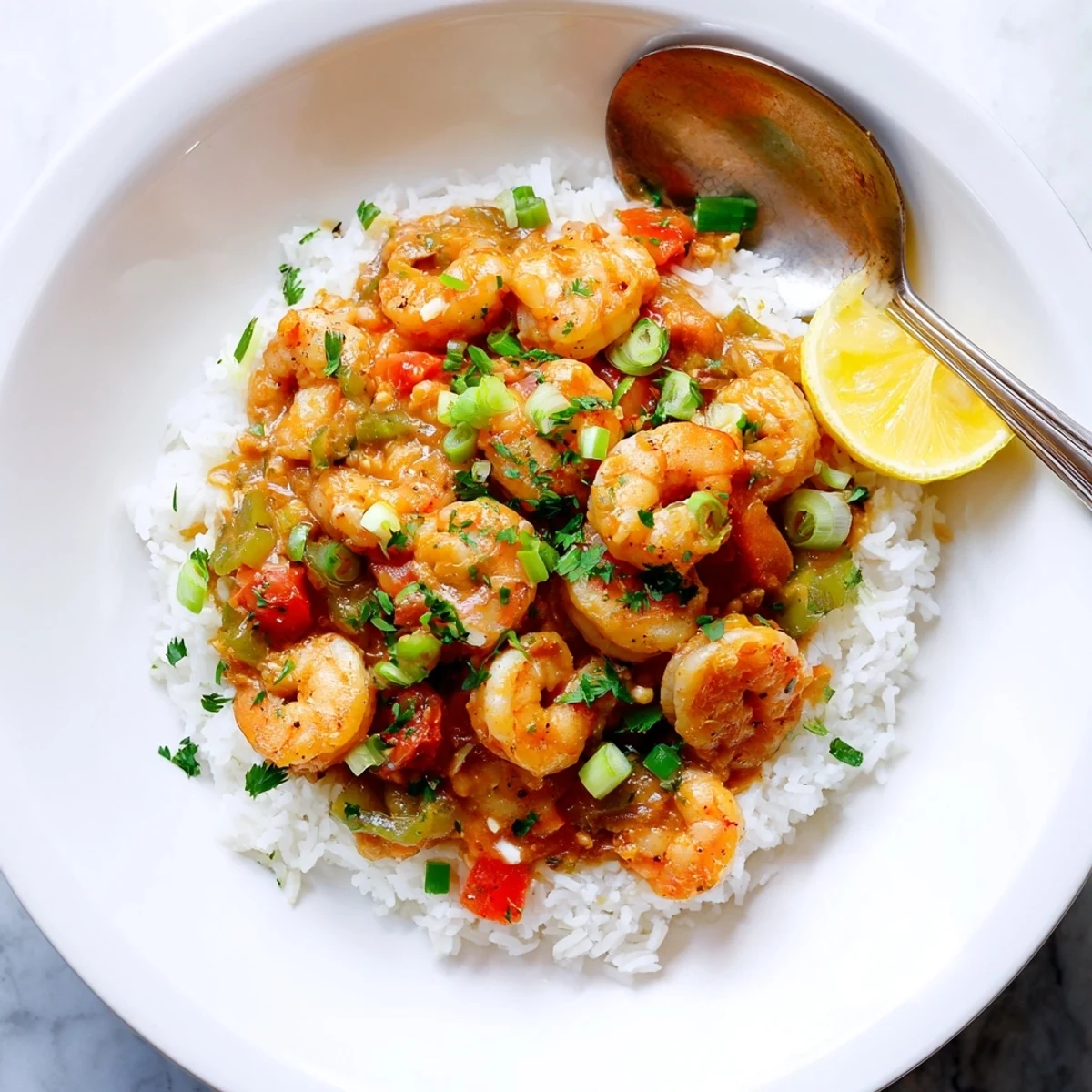
- Taste it, add salt and pepper if needed, then serve over rice with green onions and parsley scattered on top
 Pin it
 My dad claimed he didn't like shrimp until he tried this at my place, watched me make the roux while explaining how his grandmother made gumbo every Sunday. Now he asks for it whenever he visits, says it reminds him of sitting at her table as a kid.
Getting The Roux Right
The roux intimidates everyone at first, but here's what nobody tells you: it's actually pretty forgiving if you pay attention. Keep the heat at medium, stir constantly, and trust your nose more than your eyes. When it smells like toasted nuts and deep caramel, you're there.
Make It Your Own
Some nights I'll add sliced andouille sausage with the vegetables, letting it render its fat into the roux. Other times I skip the tomatoes when I want it darker and richer. The technique stays the same, but the dish changes with whatever mood I'm in.
Serving Suggestions
White rice is traditional, but I've served this over grits on cold mornings and nobody complained. A simple green salad with sharp vinaigrette cuts through the richness, and cold beer or sweet tea feels right on the table.
- Crusty bread soaks up every drop of sauce
- Hot sauce on the table lets people adjust their own heat
- Lemon wedges brighten everything up right before eating
 Pin it
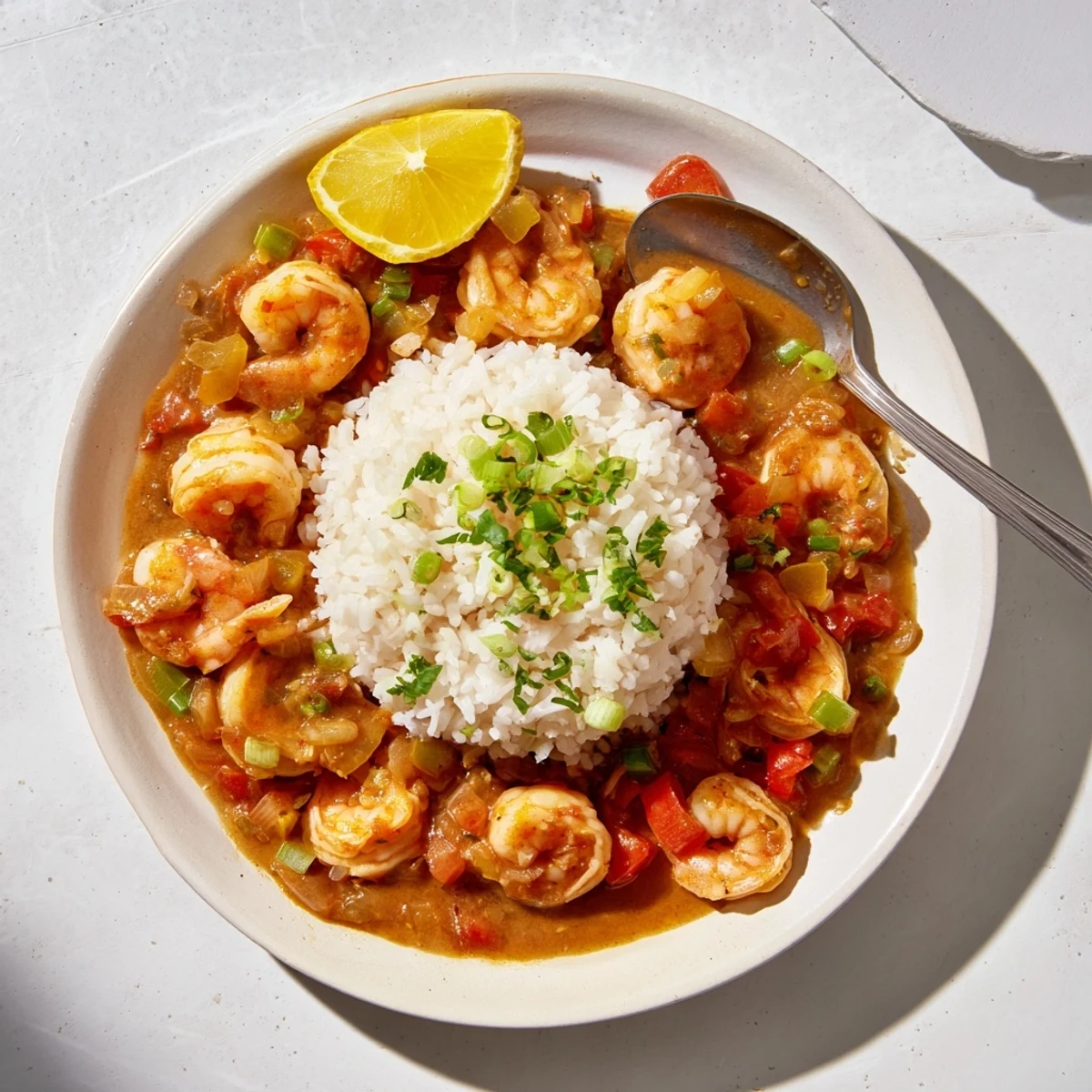
 There's something deeply satisfying about a dish that looks fancy but comes from such humble ingredients. This étouffée never fails to make people feel special, and that's probably why it keeps showing up at my table.
Recipe Q&A
- → What makes a roux dark enough for étouffée?
-
Cook the butter and flour mixture over medium heat, stirring constantly for 8-10 minutes until it reaches a deep copper or chocolate brown color. The darker the roux, the richer the flavor—but be careful not to burn it, or you'll need to start over.
- → Can I make this dish ahead of time?
-
Absolutely. The flavors actually improve after sitting overnight. Prepare the sauce base without the shrimp, refrigerate, then reheat gently and add the shrimp just before serving. They only need 3-4 minutes to cook through.
- → What's the difference between étouffée and gumbo?
-
While both use a roux base and the holy trinity of vegetables, étouffée is thicker and served directly over rice as a main dish. Gumbo is soup-like, contains more liquid, often includes okra or filé powder, and typically has rice served on the side.
- → How spicy is traditional shrimp étouffée?
-
Traditional étouffée has a mild to medium heat level. The Creole seasoning and cayenne provide warmth without overwhelming the palate. Adjust the cayenne or add hot sauce at the table to suit your preference.
- → Can I substitute crawfish for the shrimp?
-
Yes, crawfish étouffée is equally authentic and delicious. Use about 2 pounds of whole crawfish tails (peeled) in place of the shrimp. You can also combine both seafoods for a Louisiana-style seafood étouffée.
- → What vegetables are in the holy trinity?
-
The holy trinity in Cajun and Creole cooking consists of equal parts onion, celery, and green bell pepper. This aromatic vegetable base provides the foundation for countless Louisiana dishes, including étouffée, gumbo, and jambalaya.