
 Pin it
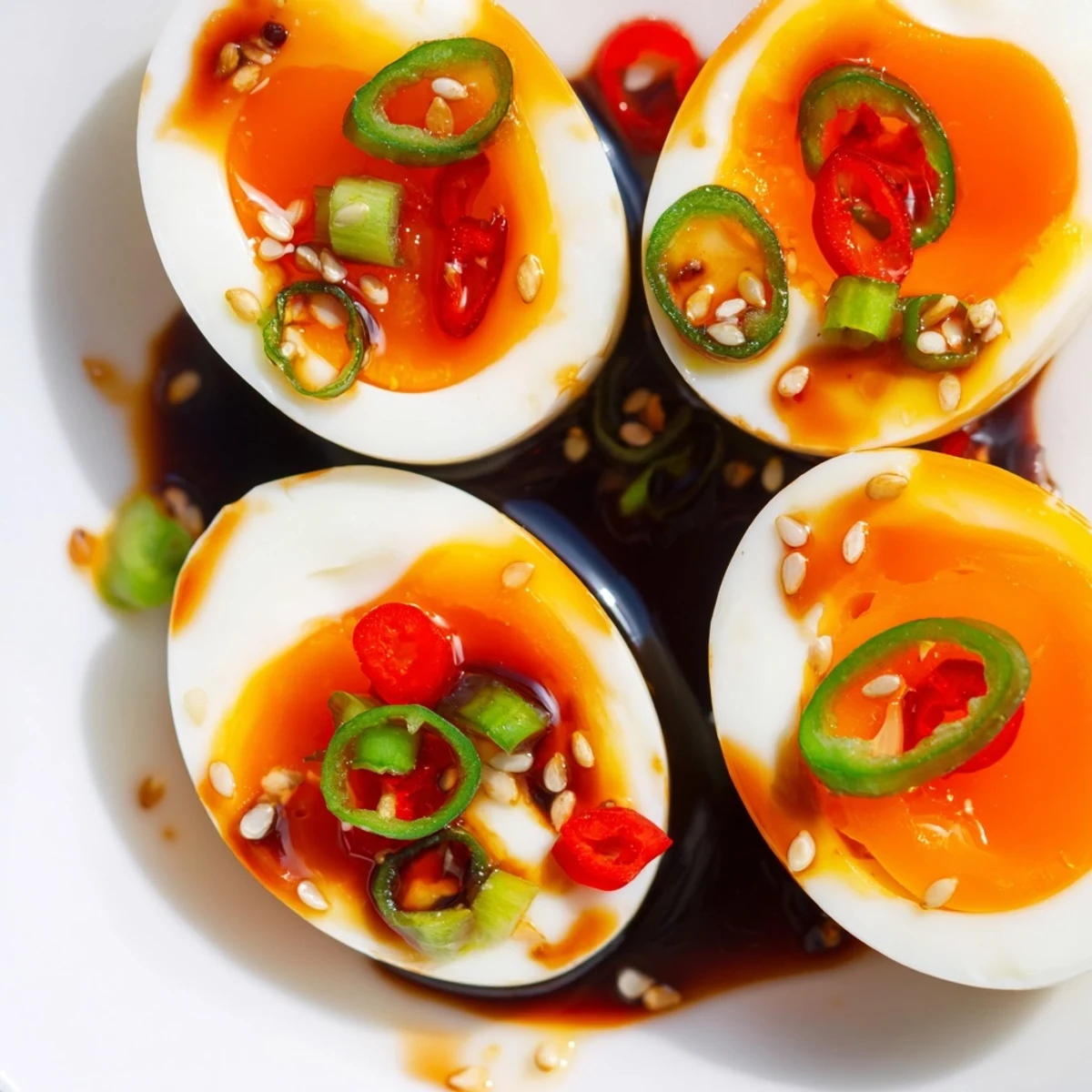
 These Korean-style marinated eggs feature perfectly jammy soft-boiled centers infused with a balanced blend of soy sauce, honey, rice vinegar, and aromatic sesame oil. The marinade penetrates the eggs over 6 hours, creating layers of umami flavor with subtle sweetness and gentle heat from fresh chili peppers.
Ideal for meal prep, these versatile eggs enhance rice bowls, noodle dishes, or stand alone as protein-rich snacks. The marinade components create complexity—garlic and green onions add depth while toasted sesame seeds provide nutty undertones.
The first time I tried these marinated eggs was at a tiny Korean restaurant in my neighborhood, tucked between a laundromat and a barber shop. I kept going back, not just for the kimchi stew, but for those amber colored gems sitting perfectly on the side of my rice bowl. Something about that jammy yolk infused with soy and sesame made me feel like I had discovered a secret treasure.
My roommate walked in while I was peeling the warm eggs and asked why I was putting them in a jar of dark liquid. She looked skeptical until I gave her one the next morning over rice. Now she texts me from the grocery store asking if I need more eggs.
Ingredients
- 6 large eggs: Room temperature eggs peel more cleanly and cook more evenly
- 1/2 cup soy sauce: Low sodium gives you control over saltiness, but regular works if you adjust the honey
- 1/2 cup water: This dilutes the soy sauce just enough so the eggs do not become overwhelmingly salty
- 2 tbsp honey: Honey dissolves easily in cold liquid and adds a mellow sweetness
- 2 tbsp rice vinegar: Adds brightness that cuts through the richness of the yolks
- 2 tbsp sesame oil: Toasted sesame oil is non negotiable here for that authentic Korean flavor
- 3 cloves garlic, minced: Fresh garlic makes all the difference, jarred garlic tastes too sharp
- 2 green onions, finely sliced: Both the white and green parts add different layers of flavor
- 1 red chili pepper, thinly sliced: Leave this out if you prefer zero heat
- 1 green chili pepper, thinly sliced: These add a fresher heat than dried red pepper flakes
- 1 tbsp toasted sesame seeds: Toast them in a dry pan for 2 minutes first, it completely transforms the flavor
Instructions
- Boil the eggs:
- Bring a medium pot of water to a rolling boil, then gently lower the eggs in with a slotted spoon. Set a timer for exactly 6 minutes and 30 seconds for that perfect jammy yolk consistency.
- Ice bath shock:
- Prepare a bowl with ice and cold water while the eggs cook. Immediately transfer the eggs there once done and let them cool for 5 minutes.
- Peel carefully:
- Gently tap the eggs on the counter and roll them to crack the shells all over. Start peeling from the wider end where there is a small air pocket.
- Make the marinade:
- Whisk together soy sauce, water, honey, rice vinegar, sesame oil, garlic, green onions, chili peppers, and sesame seeds until the honey dissolves completely.
- Marinate:
- Place the peeled eggs in a container and pour the marinade over them. Make sure the eggs are fully submerged and refrigerate for at least 6 hours.
 Pin it
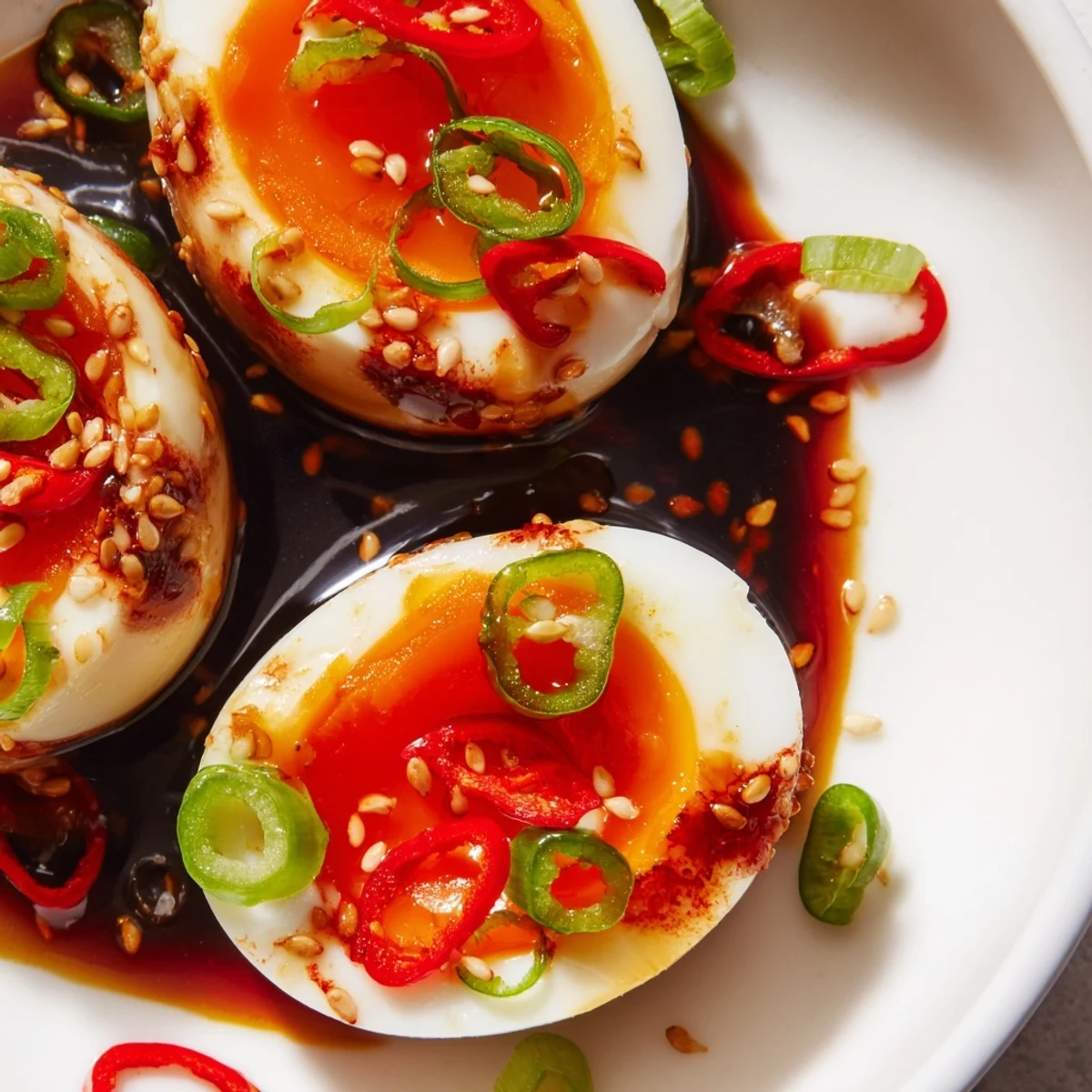
 I made these for a dinner party once and served them alongside grilled meats. Everyone kept reaching for them like bar snacks, and by the end of the night the jar was empty and people were asking for the recipe instead of dessert.
Getting That Perfect Jammy Yolk
The difference between a 6 minute egg and a 7 minute egg is remarkable. Too little time and you have a soft boiled egg that falls apart when you try to peel it. Too much and you lose that luscious, golden center that makes these eggs so special. I use my phone timer now because counting in my head is never accurate enough.
Marinade Magic
The marinade does all the heavy lifting here, transforming plain hard boiled eggs into something extraordinary. What I love most is how the flavors penetrate differently into the white versus the yolk. The white becomes deeply savory while the yolk remains creamy with just a hint of the aromatic mixture. Soy sauce, honey, and sesame oil form this holy trinity of Korean flavor that works on practically anything.
Serving Ideas
These eggs shine brightest when they become part of something bigger. A halved egg over steamed rice with some of the marinade spooned on top is my go to quick lunch. They also work beautifully tucked into a bowl of ramen or udon noodles. I have even chopped them into a cold noodle salad on particularly hot days when cooking feels like too much effort.
- Try them alongside pickled vegetables for a Korean inspired bento box
- Add them to a grain bowl with roasted vegetables and a spicy gochujang dressing
- Two eggs with rice and kimchi make the perfect late night snack
 Pin it
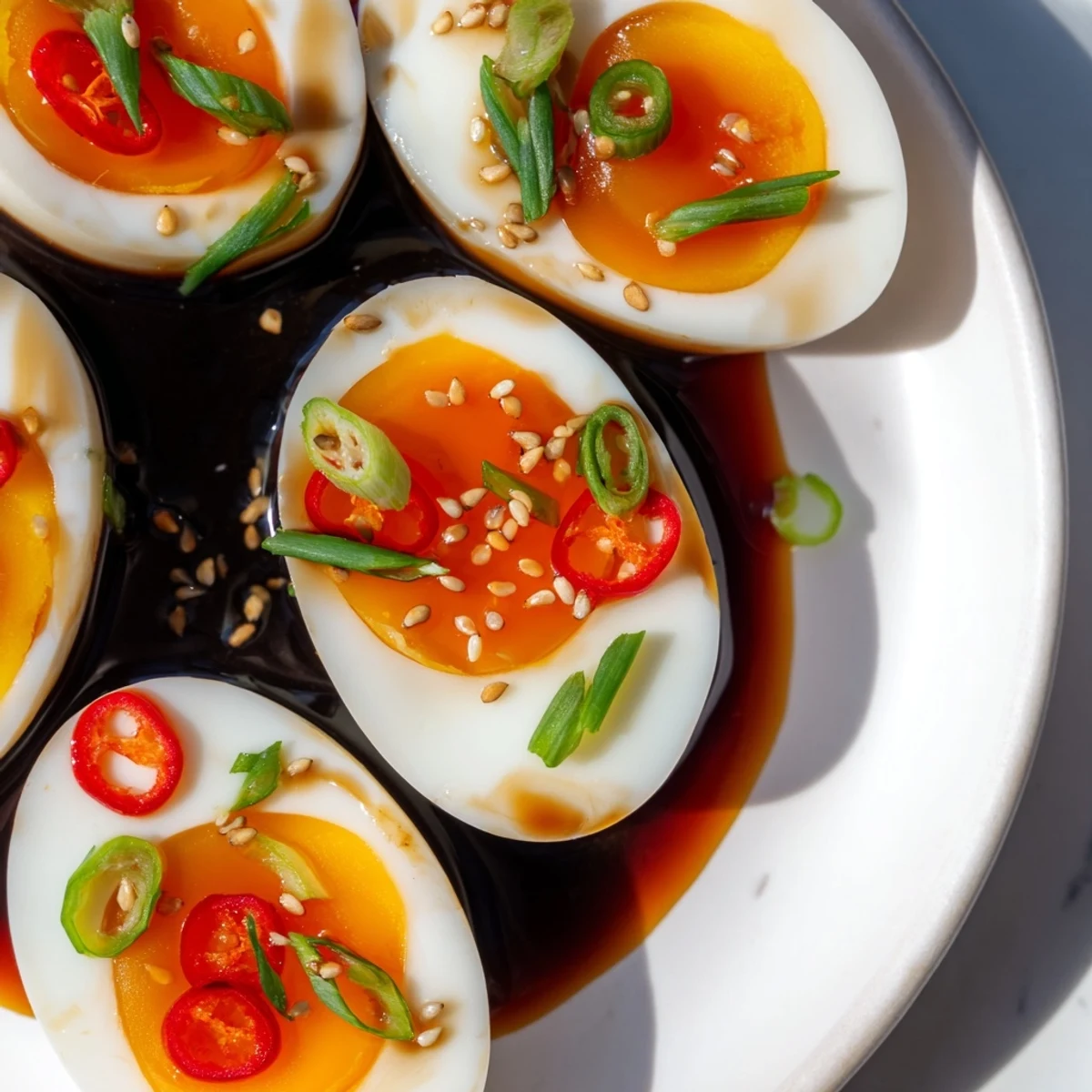
 There is something deeply satisfying about opening the refrigerator and seeing that jar of eggs curing in their amber bath. It feels like having a special treat waiting for you, ready to elevate even the most rushed weekday meal into something worth slowing down for.
Recipe Q&A
- → How long do marinated eggs keep in the refrigerator?
-
Marinated eggs stay fresh for up to 4 days when stored in an airtight container in the refrigerator. The flavor continues developing over time, becoming more pronounced after 24 hours of marination.
- → Can I make these spicy?
-
Absolutely. Adjust heat levels by adding more sliced red chili peppers or incorporating gochugaru (Korean red pepper flakes) into the marinade. For maximum spice, let the peppers infuse longer before adding the eggs.
- → What's the best way to achieve jammy yolks?
-
Boil large eggs for exactly 6-7 minutes, then immediately transfer to an ice bath for 5 minutes. This stops the cooking process and ensures the yolks remain creamy and slightly runny rather than fully set.
- → Can I reuse the marinade?
-
The marinade can be used for one additional batch. Bring it to a boil first to ensure food safety, then let it cool completely before adding freshly peeled eggs. The flavor will be more intense on the second use.
- → What can I substitute for honey?
-
Maple syrup, brown sugar, or agave nectar work well as honey alternatives. Each slightly alters the flavor profile—brown sugar adds deeper caramel notes while maple syrup provides woodier sweetness.
- → Are these suitable for gluten-free diets?
-
Yes, simply replace regular soy sauce with tamari or certified gluten-free soy sauce. All other ingredients including rice vinegar, sesame oil, and fresh vegetables are naturally gluten-free.