
 Pin it
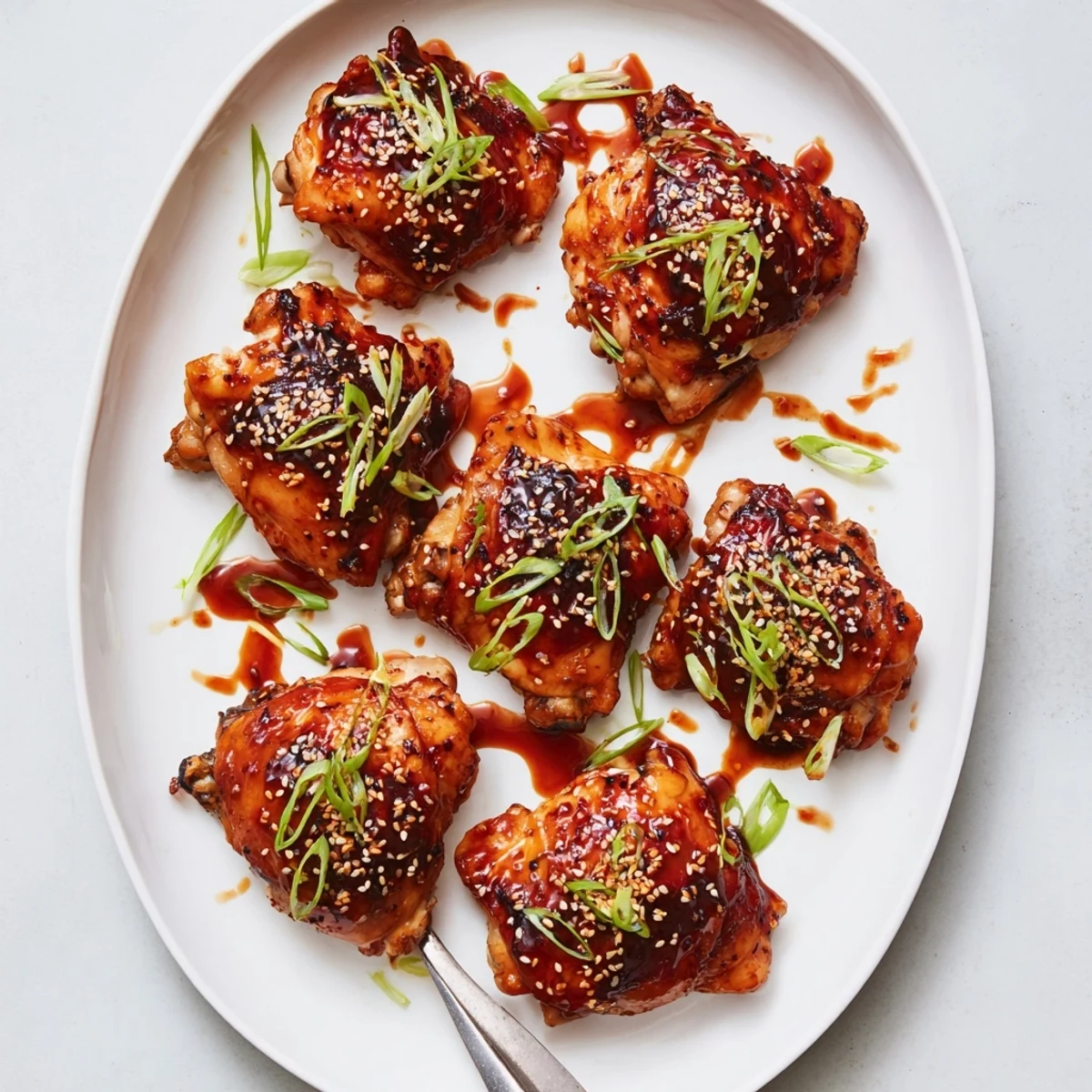
 These bone-in chicken thighs deliver incredible flavor through a simple yet effective technique. The skin-on thighs create natural richness while the bone keeps meat moist during roasting. A homemade teriyaki marinade of soy sauce, mirin, honey, ginger, and garlic infuses every bite with authentic Japanese flavors.
The oven method yields crispy, caramelized skin while the meat remains tender and juicy. Basting with reserved marinade creates that signature glossy glaze. Serve over steamed rice with sautéed vegetables for a complete dinner that comes together in just 55 minutes.
The smell of teriyaki caramelizing in a hot oven is the kind of thing that makes neighbors knock on your door and pretend they just wanted to say hello. My tiny apartment kitchen in Osaka had a toaster oven barely big enough for four thighs, but that never stopped me from cramming in all eight and hoping for the best. The skin would blister and the soy sauce would reduce into something dark and lacquered and absurdly good. I burned the parchment paper more than once, and honestly, the char added character.
A friend once told me that teriyaki chicken was too simple to impress anyone, so I made it for her birthday dinner and watched her eat three thighs in silence before finally admitting defeat.
Ingredients
- 8 bone in skin on chicken thighs (about 1.5 kg): Bone in thighs stay juicy through the long roast, and the skin renders into something almost candy like under high heat.
- 1/3 cup soy sauce: Use a good Japanese soy sauce if you can find one, it tastes rounder and less aggressively salty than standard supermarket brands.
- 1/4 cup mirin: This Japanese sweet rice wine is what gives teriyaki its signature shine and gentle sweetness, so do not skip it.
- 2 tbsp honey: Honey helps the glaze cling to the skin and adds a floral note that brown sugar alone cannot replicate.
- 2 tbsp brown sugar: Brown sugar deepens the color and gives the sauce a molasses backbone that pairs beautifully with the soy.
- 2 tbsp rice vinegar: A splash of acidity cuts through the richness and keeps the sweetness from becoming cloying.
- 2 cloves garlic, minced: Fresh garlic only, the jarred stuff tastes flat and metallic once it hits a hot oven.
- 1 tbsp fresh ginger, grated: Grate it on the finest holes so it nearly melts into the marinade rather than leaving chewy chunks.
- 1 tbsp sesame oil: Toasted sesame oil adds a nutty depth that rounds out the whole sauce with just a small drizzle.
- 1 tbsp cornstarch (optional): Mixed with water, this turns thin marinade into a velvety glaze that coats the chicken like a lacquer.
- 2 green onions, thinly sliced: The sharp fresh bite of raw green onion on top contrasts beautifully with the sweet sticky chicken.
- 1 tbsp toasted sesame seeds: Toast them yourself in a dry pan for one minute and you will never go back to the untoasted kind.
Instructions
- Whisk the marinade together:
- In a large bowl, combine the soy sauce, mirin, honey, brown sugar, rice vinegar, garlic, ginger, and sesame oil. Whisk until the honey dissolves and the whole kitchen smells like a Japanese street market.
- Coat the chicken:
- Drop the chicken thighs into the bowl and turn them over and over until every crevice is slick with marinade. Cover and refrigerate for at least 30 minutes, though overnight is when the real magic happens.
- Preheat and prep the pan:
- Set the oven to 200 degrees Celsius (400 degrees Fahrenheit) and line a baking tray with parchment paper or foil. This saves you from scrubbing baked on teriyaki glue later, which is a chore nobody deserves.
- Arrange the thighs:
- Pull the chicken from the marinade and lay each thigh skin side up on the tray, saving every last drop of the liquid in a bowl. Give them a little space so the hot air can circulate and crisp the edges.
- Roast and baste:
- Roast for 35 to 40 minutes, pulling the tray out after 20 minutes to spoon the reserved marinade over each thigh. The chicken is done when the internal temperature hits 75 degrees Celsius (165 degrees Fahrenheit) and the skin is deeply golden.
- Reduce the sauce:
- While the chicken roasts, pour the remaining marinade into a small saucepan and bring it to a rolling boil. If you want a thicker glaze, stir in the cornstarch slurry and simmer for 3 to 5 minutes until it coats the back of a spoon.
- Glaze and garnish:
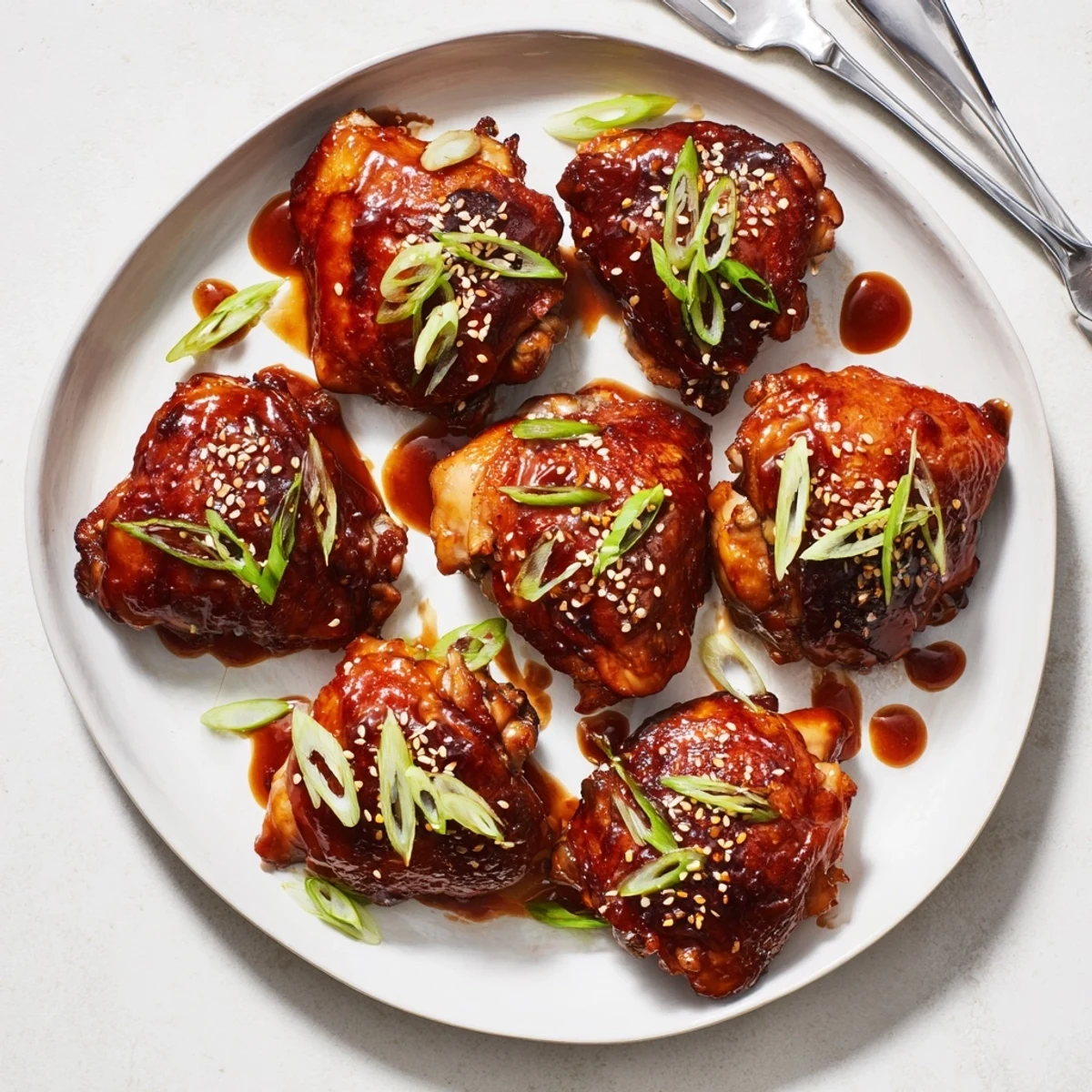
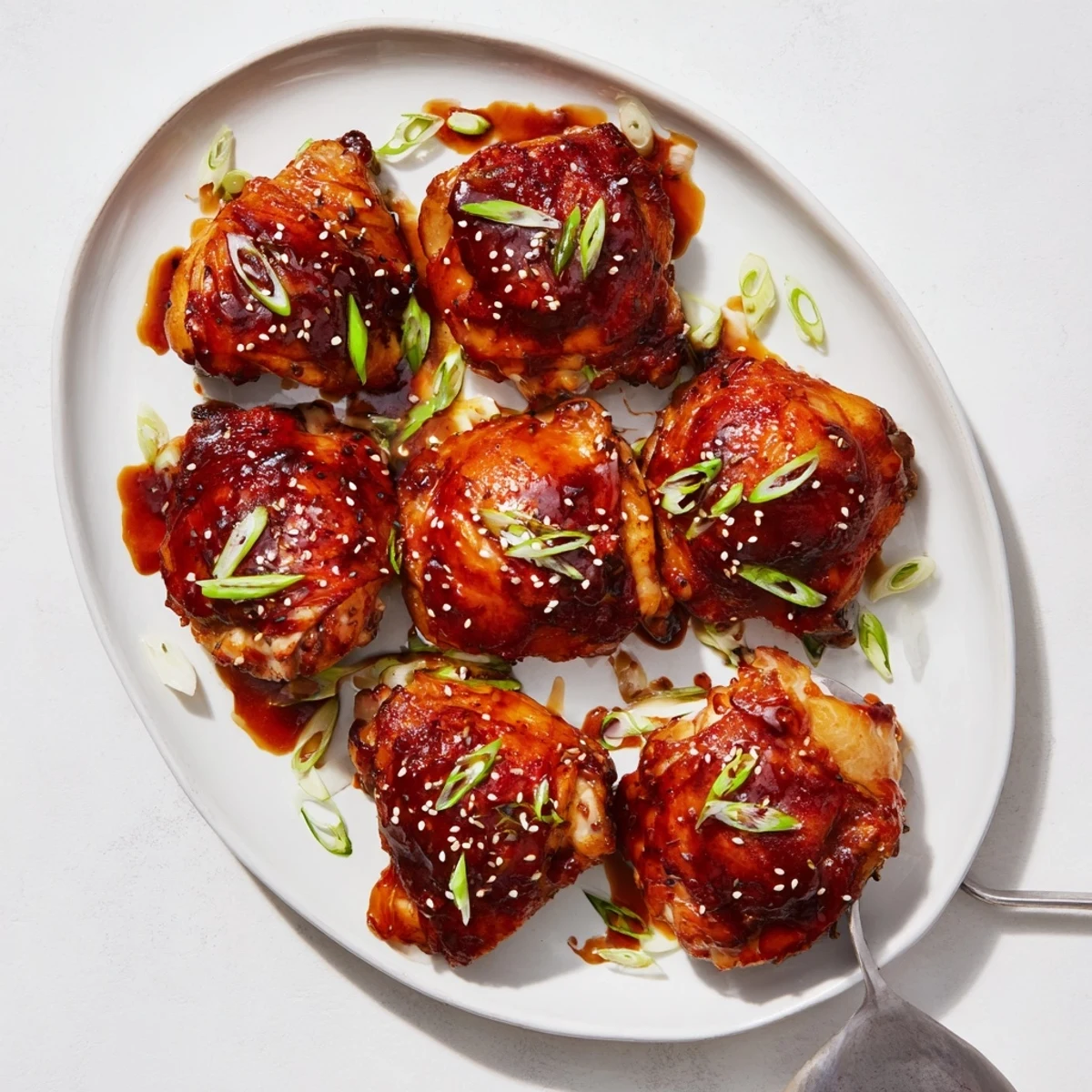
- Arrange the finished chicken on a platter, drizzle generously with the reduced sauce, and scatter the sliced green onions and sesame seeds over the top. Serve immediately while the skin is still crackling.
 Pin it
 There was a rainy Tuesday when I made this for just myself and ate it standing at the kitchen counter with a bowl of rice, too impatient to sit down, and I realized that some meals do not need an audience to feel complete.
Serving Ideas That Actually Work
Steamed white rice is the obvious pairing, and for good reason, because it soaks up the extra sauce like a sponge and balances the intensity. Sautéed bok choy or a quick cucumber salad with rice vinegar adds crunch and brightness that the rich chicken desperately needs. A cold glass of sake or a crisp white wine turns a weeknight dinner into something that feels deliberate and special.
Swaps and Substitutions
If you cannot find mirin, dry sherry with a squeeze of extra honey gets you surprisingly close to the real thing. Tamari works perfectly in place of soy sauce if you need the dish to be gluten free, and the flavor difference is barely noticeable once everything caramelizes together. A pinch of chili flakes in the marinade wakes the whole dish up without turning it into something spicy.
Tools That Make This Easier
A basting brush gets the marinade into every fold of skin, and a rimmed baking tray saves your oven from drips and splatters. Keep a few basic tools on hand and the whole process feels effortless.
- A large mixing bowl gives you room to toss the chicken without splashing marinade everywhere.
- An instant read thermometer takes the guesswork out of doneness and prevents dry, overcooked thighs.
- Foil or parchment on the tray means cleanup is a thirty second job instead of a soaking nightmare.
 Pin it
 Make a double batch because the leftovers are magnificent cold from the fridge at midnight, and you will thank yourself later.
Recipe Q&A
- → How long should I marinate the chicken?
-
Marinate for at least 30 minutes for basic flavor absorption. For optimal results, marinate overnight in the refrigerator to allow the teriyaki flavors to deeply penetrate the meat.
- → Can I use boneless chicken thighs instead?
-
Yes, boneless thighs work well but reduce cooking time to 25-30 minutes. The bone-in version provides better flavor and moisture retention during roasting.
- → What can I substitute for mirin?
-
Dry sherry combined with a touch of extra honey makes an excellent substitute. The sherry provides similar sweetness and depth that mirin contributes to the glaze.
- → How do I know when the chicken is done?
-
Use a meat thermometer to check for an internal temperature of 75°C (165°F). The juices should run clear when pierced, and the skin should appear golden and caramelized.
- → Can I make this gluten-free?
-
Absolutely. Replace regular soy sauce with tamari, which provides the same savory flavor profile without gluten. All other ingredients naturally contain no gluten.
- → What sides pair best with this dish?
-
Steamed jasmine rice is classic, but cauliflower rice works for low-carb meals. Sautéed bok choy, snap peas, or broccoli complement the sweet teriyaki flavors perfectly.